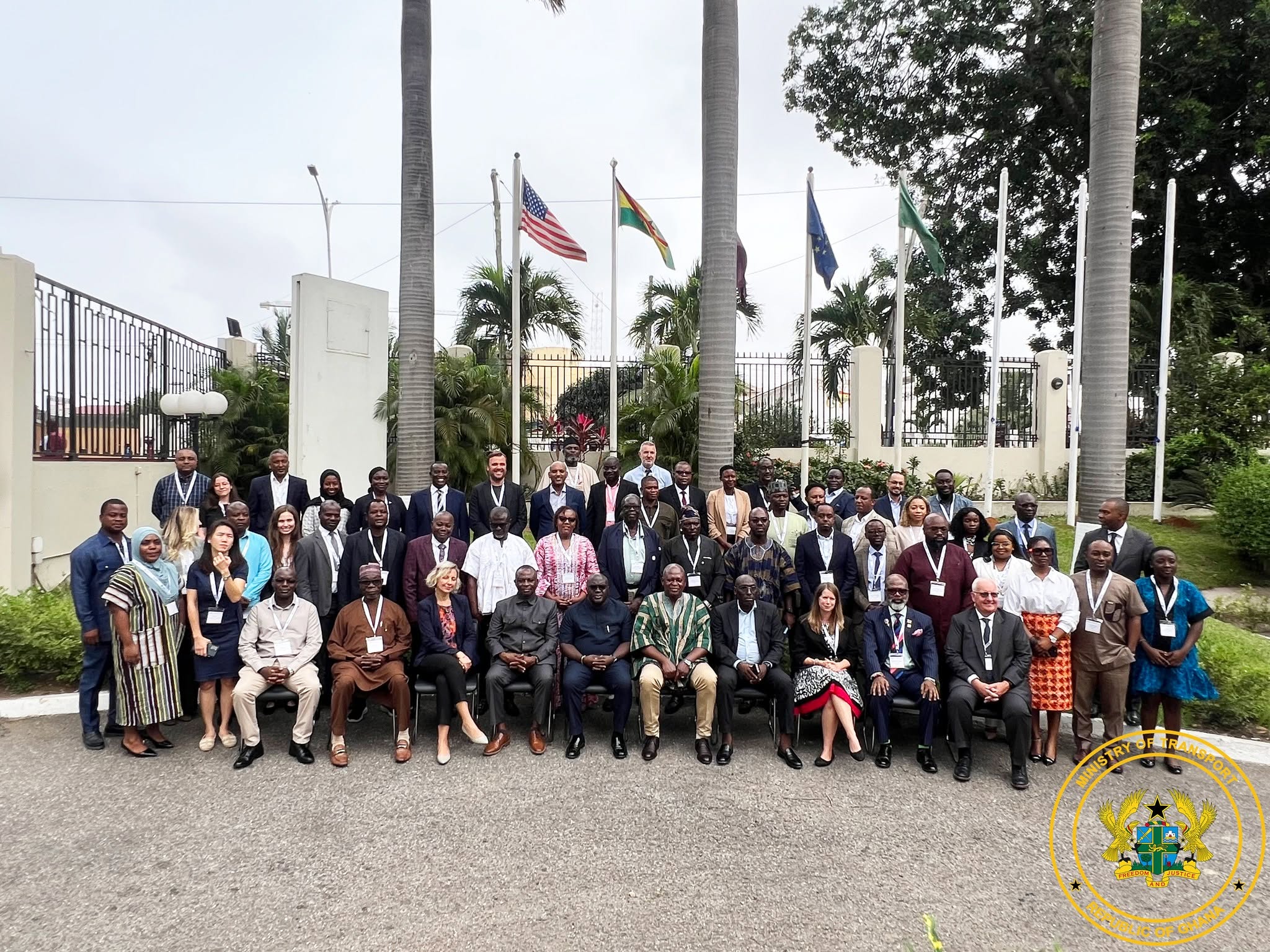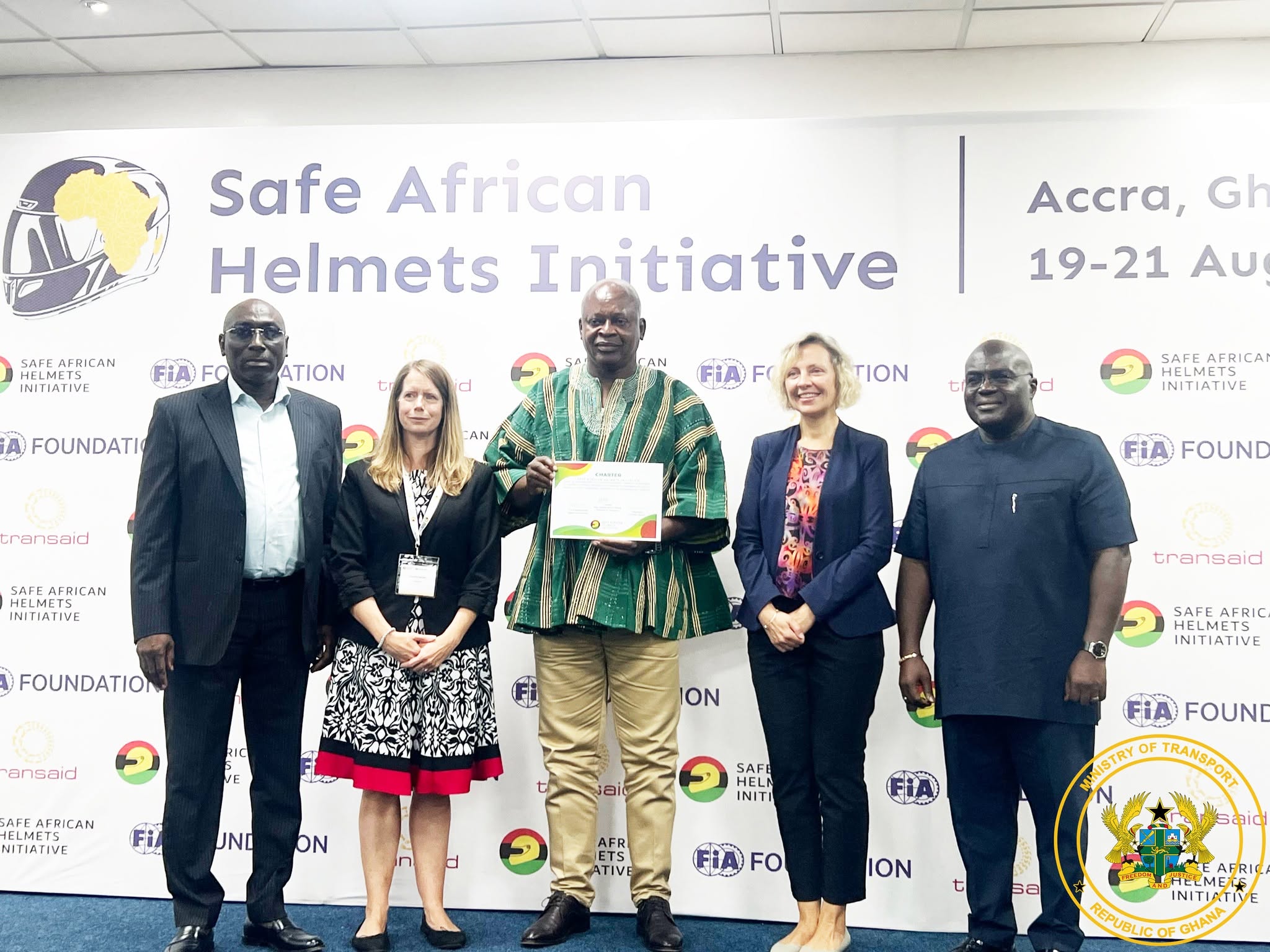
The Government of Ghana has reaffirmed its commitment to improving motorcycle safety and strengthening road safety systems as Ghana hosts the 2026 Safe African Helmets Initiative (SAHI) Summit in Accra.
Speaking at the opening of the summit, the Chief of Staff, Hon. Dr. Julius Debrah, stated that the passage of the Road Traffic Amendment Act 2025 (Act 1153) had provided a legal framework for the commercial use of motorcycles, tricycles and quadricycles, while also reducing the minimum age for commercial drivers from 25 to 21 years.
According to him, legislation alone cannot guarantee safer roads, stressing the need for effective implementation through public education, appropriate standards, rider training, responsible enforcement and strong collaboration with riders.
“A law does not by itself train the rider, remove an unsafe helmet from the market or apply the rules fairly. That requires coordination, public education, proper standards, responsible enforcement and the cooperation of the riders themselves”, the Chief of Staff stated.
He therefore called for sustained attention to helmet standards, testing and certification, rider training, licensing, enforcement and public awareness, noting that enforcement must be fair and consistent and should be understood by riders and passengers as a measure to protect lives rather than to burden them.
“The true measure of our efforts will be found on ordinary roads long after this summit has ended; every head deserves a safe helmet. Every journey deserves a safe return, and every life saved is a family kept home,” he said.
Speaking on behalf of the SAHI, the Programmes Director of the FIA Foundation, Agnieszka Krasnolucka-Hickman, said motorcycle safety had become an increasingly urgent issue as motorcycle use continues to expand across Africa, noting their important part in transportation systems across the continent because they are affordable, versatile and efficient, particularly for delivery and taxi services.
She added that motorcycle fatalities in Africa had doubled since 2013 and that riders faced a substantially higher risk of death in a crash compared with occupants of cars. She further stressed that head injuries remain a major cause of motorcycle fatalities.
Ms. Krasnolucka-Hickman explained that quality helmets can significantly reduce the risk of death and serious brain injury, making the establishment and enforcement of helmet standards an essential component of road safety policy. According to her, countries must not only legislate helmet standards but also ensure markets can provide affordable, certified, quality helmets to motorcycle riders.
Ms. Krasnolucka-Hickman said the central objective of SAHI was to ensure that every person travelling on a motorcycle has access to a certified helmet, describing the goal as timely and critical to achieving the global target of a 50 per cent reduction in road deaths by 2030.
She commended Ghana's commitment to motorcycle safety and acknowledged the collaboration of key institutions, including the Ministry of Transport, the National Road Safety Authority, the Ghana Standards Authority, the Driver and Vehicle Licensing Authority, the Ghana Police Service and the Ghana Revenue Authority, as well as motorcycle riders' associations.
As Ghana continues to strengthen its transport and road safety systems, the SAHI Summit provides an important platform for sharing knowledge and developing coordinated approaches to address the growing safety challenges associated with motorcycle transportation.